
From Digital Tools to Connected Employment Journeys
8 min read
How public employment services can turn insight into action, and opportunity into sustainable employment
A counselor may have access to an employer portal, a skills assessment, a training catalog and labor-market forecasts. Each tool may perform well independently. But what should the person sitting opposite them do next? Public employment services have spent years building digital tools. Even when those tools work well, the responsibility for connecting their information and turning it into a practical next step can still fall to counselors and jobseekers.
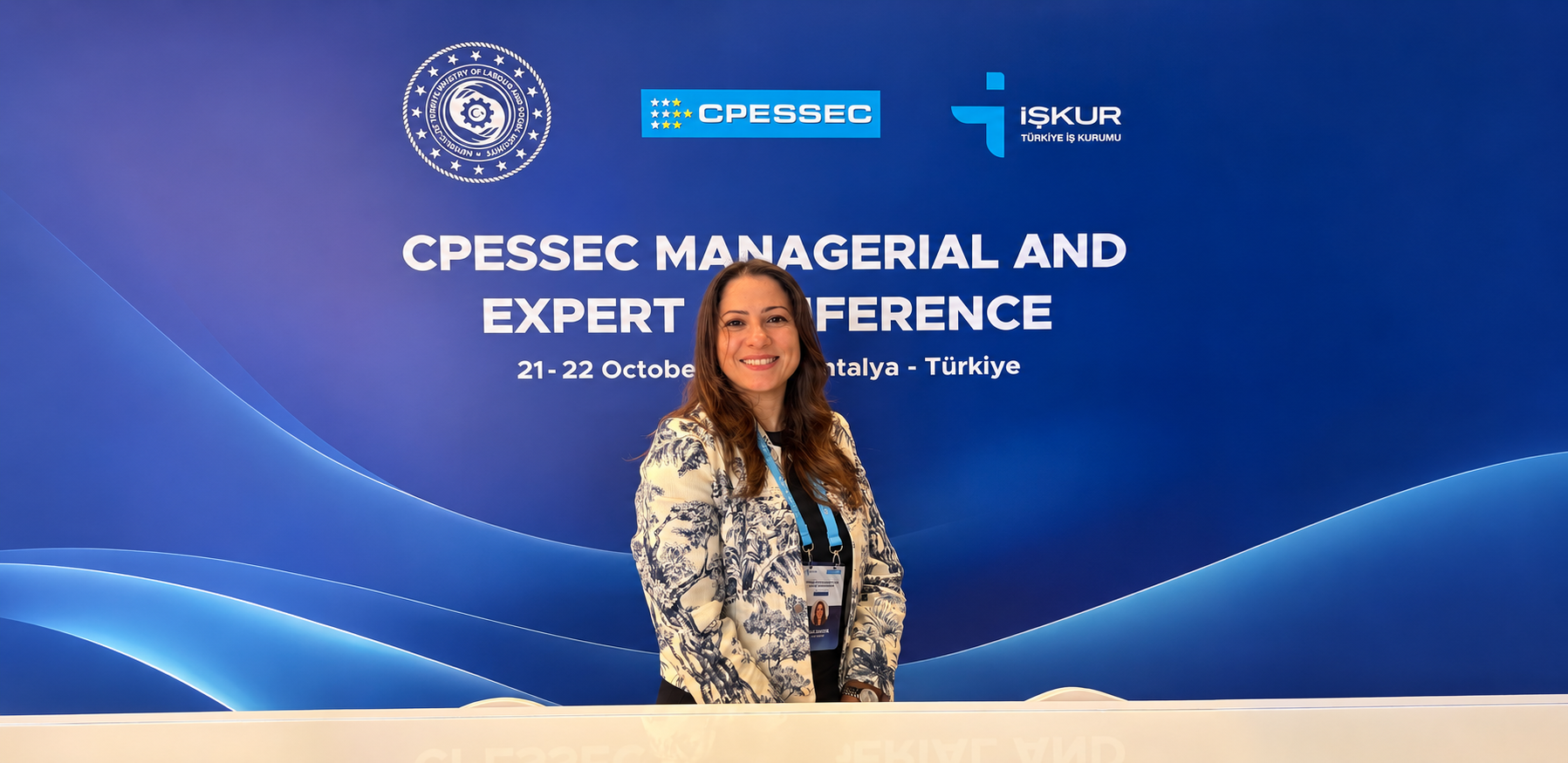
This was the question I kept returning to at the conference of the Centre of Public Employment Services of Southeast European Countries (CPESSEC), held in Antalya on October 21–22, 2026. The conference brought together PES leaders and experts from across the region, alongside World Bank economists, to discuss changing labor markets, skills needs and the role of employment services.
Contributions on employer intelligence, workplace skills, education data and digital services examined employment from different perspectives. Together, they pointed to a broader challenge: how much of the work of connecting these capabilities are we still asking counselors and jobseekers to do themselves? The next stage of PES digitalization should focus on how existing and new capabilities work together around the person’s employment journey.
From labor-market demand to individual opportunity
Knowing where demand exists is useful. Turning that knowledge into a realistic route for an individual is something else. Bulgaria described the use of employer surveys to inform training priorities, while Türkiye examined tasks in real workplaces to better understand the skills behind occupations. Together, these examples show how labor-market intelligence can provide a strong foundation for linking employer demand, skills and individual employment pathways.
The European Training Foundation (ETF) added a complementary perspective, describing how online job vacancy analysis can be combined with PES data to build a broader picture of changing demand. Its contribution also highlighted coordination between institutions and the importance of using skills intelligence to inform policies and services. For PES, the next step is to turn these insights into decisions for individual jobseekers.
A forecast may identify demand for an occupation. A counselor, however, needs to understand what available roles involve in practice, which requirements a person already meets, where the gaps lie and what preparation could make a transition realistic. Training providers need another part of the same picture: what capability is a program expected to develop, and how does that learning relate to an identified labor-market need?
When these connections rely entirely on individual effort, the reasoning must be rebuilt repeatedly. A more connected service makes that reasoning visible and reusable:
- This employer needs these capabilities.
- This person brings relevant experience.
- This is the gap.
- This learning could help close it.
That is the difference between providing labor-market information and helping someone act on it.
Connecting experience, employer needs and learning
Jobseekers, employers and education providers describe the same labor market from different positions: a jobseeker describes experience, an employer describes work that needs to be done, and an education provider describes what someone can learn. The challenge is enabling these three conversations to understand one another.
Türkiye’s contribution illustrated why occupational titles alone cannot always provide that connection. Two employers may use the same title for roles involving different tasks. Similarly, two people with the same previous job title may bring different capabilities. When a potential match is considered, the detail of actual experience needs to remain visible.
Training should not enter the process simply because someone has not found work. A course should be relevant because its learning outcomes address an identified need. Once that learning is completed, the resulting evidence should update the person’s profile and shape what the service recommends next.
A shared skills vocabulary, such as the European Commission’s ESCO classification, can provide a foundation across employment and education. Its value lies in how it connects real profiles, vacancies and learning outcomes.
For the individual, these links should be clear:
- Why is this opportunity relevant to me?
- What capabilities do I already have?
- What am I missing?
- What could help me close the gap?
When a platform can support that conversation, skills become more than a classification. They create a practical route between experience, opportunity and learning.
What unsuccessful matches can teach us
A connected service should not learn only from successful matches. North Macedonia made an important distinction: recruitment difficulties may reflect missing skills or experience, but they can also result from wages or working conditions. The response should depend on the cause.
A person may meet the requirements of a vacancy but be unable to accept its hours or location. Another training course would not address that barrier. If the reason is captured and carried forward, it can improve the next recommendation rather than disappearing after an unsuccessful referral. It can also inform the employer conversation: which requirements are essential, what could be learned after joining and which conditions may be limiting recruitment?
Integration, then, is more than exchanging records between systems. It means preserving what the service has learned about both the person and the opportunity, while leaving room for counselors to apply professional judgment. The next decision should begin with that knowledge, not start from zero.
Placement is not the end of the journey
The need to learn from experience continues after someone enters employment. In a conversation with Dhushyanth Raju, Lead Economist at the World Bank at the conference, I was asked a question that has stayed with me: do we know that someone actually starts a job, and do we know whether they are still employed six months later?
A confirmed job start is an important milestone, but it does not tell us what happened afterward. In my view, PES performance indicators should give sustained employment a prominent place alongside job starts, and the findings should inform how support is delivered.
Measures of sustained employment, progression and return to unemployment provide a fuller picture. The distinction matters. Remaining with the same employer is not the same as remaining in employment. Someone who moves to a better role after three months may be progressing. Someone else may return to unemployment and require further support. A connected employment journey should therefore help us ask more than, “Did we make a placement?” It should help us ask:
- What happened next?
- Why did it happen?
- What should we learn from it?
Romania’s contribution on linking education and employment records offered a related example of following what happens after a program has ended. This feedback matters because the appropriate next intervention depends on the cause. If someone returns to unemployment because of a skills gap, further learning may be appropriate. If the issue relates to hours, location or working conditions, the response may need to be entirely different. Outcome information is therefore more than a KPI. It is an input into the next matching, guidance or learning decision.
Where digital connections are missing
Looking at the employment journey end to end also changes how we think about digital investment. The question is no longer simply whether an employment service has a vacancy portal, a training catalog, a matching capability or labor-market intelligence. The more useful question is whether information and insight can move between these capabilities in a way that helps a person take the next step.
Following the journey may reveal that the gap lies between capabilities that already exist. It may also show that an important capability is missing altogether.
The United Nations Development Programme (UNDP) Türkiye emphasized the need to invest in institutional capacity alongside support for individuals, including data management, monitoring and evaluation, and digital learning. For me, this reinforces the point that connecting tools also requires institutions to have the capacity and working arrangements to turn information into practical support.
Can learning be linked to a specific skills gap? Can the outcome of a referral improve the next recommendation? Can employment outcomes shape future guidance? These questions help identify what a service needs to know at each point in the employment journey, and whether its digital capabilities can support that decision.
When the journey crosses borders
The challenge becomes more complex when someone’s employment pathway crosses national systems. The Director General of Montenegro’s public employment service raised the idea of a regional platform in response to labor mobility between neighboring countries. This raises a practical question: can what we understand about someone’s experience remain meaningful when they explore work in another country?
Shared skills information could support this, alongside clear information about language, qualifications and other conditions affecting mobility. National investments can prepare for this cooperation by ensuring that information remains meaningful beyond the system in which it was collected. This takes interoperability beyond technical data exchange. What matters is whether the meaning of information can travel with the person.
Start with the person’s experience
A comprehensive employment service does not require a single application to do everything. Specialist capabilities can work together through shared definitions, reliable data exchange and coordinated workflows. Different technology choices can still contribute to a coherent experience.
Following a jobseeker from initial guidance through skills assessment, matching, learning and employment can reveal where information already flows effectively, where connections need strengthening and where an additional capability could add value. For PES, a practical starting point is to identify where information stops, where decisions must be reconstructed manually and where a missing connection prevents someone from moving forward. Assessing digital capability through this experience can help clarify where investment would add value.
The future of PES digitalization will not be defined by how many systems a service has. It will be defined by how effectively those systems work together to turn insight into action, and opportunity into sustainable employment.
Article by: Azza Alhayek
WCC - Software that Matters
Our team is ready to answer your questions.